Farming involves a lot of hard work, especially when it comes to preparing the soil and controlling weeds. For many farmers, doing these jobs manually takes a lot of time and labour. Tractors can make the work easier, but they are not always practical for small fields, vegetable farms, orchards or narrow spaces.
This is where a power weeder can be useful.
A power weeder is a compact agricultural machine designed to loosen soil, remove weeds and help with different cultivation activities. Because of its smaller size, it can work in areas where larger machines may not be easy to operate.
But what exactly is a power weeder, and how does it work? Let’s understand it in simple terms.
What Is a Power Weeder?
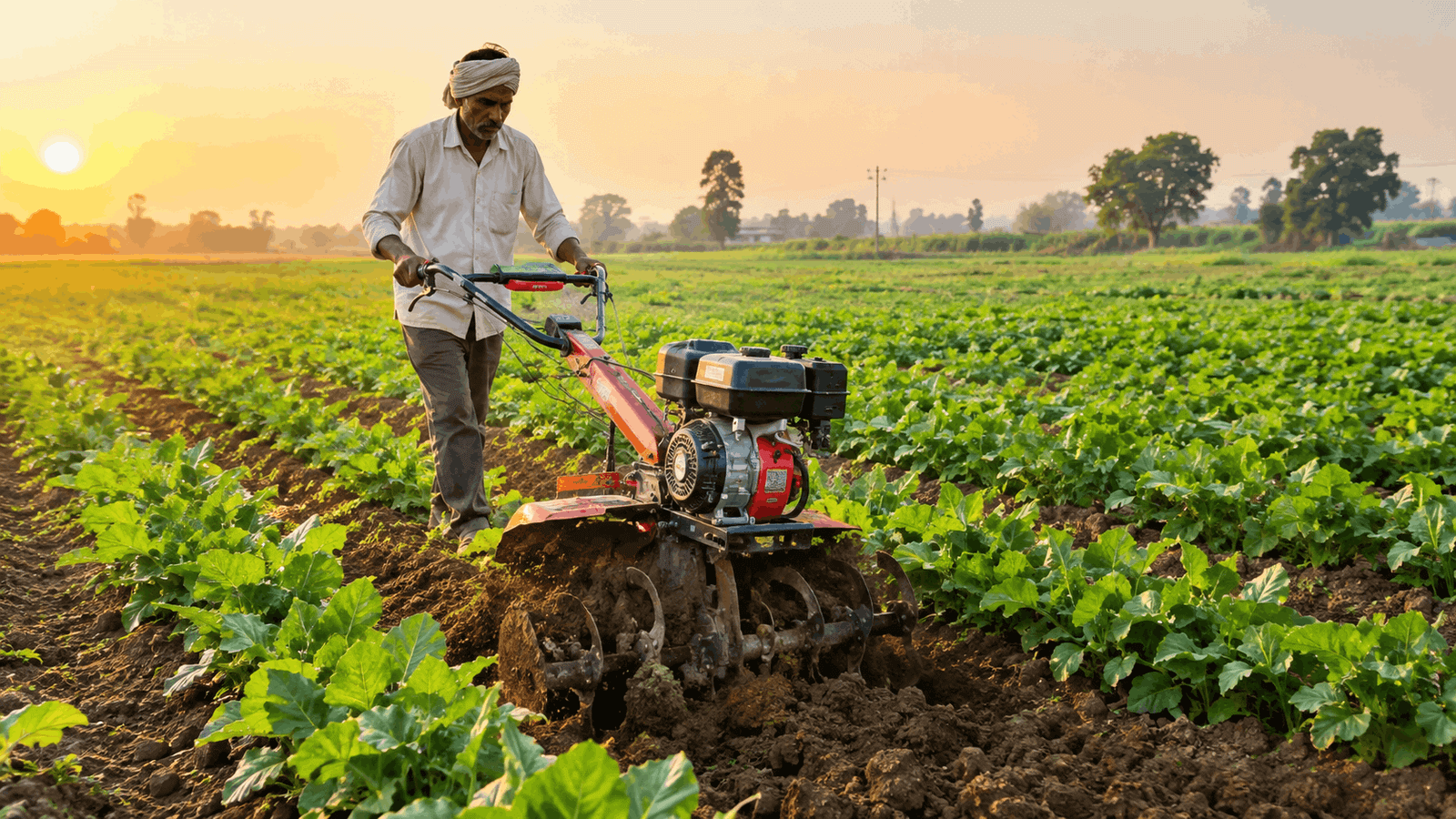
A power weeder is a small farming machine used for weeding, soil cultivation and field preparation. It generally consists of an engine, transmission system, wheels, handlebars and rotating blades or tines.
The rotating blades are the main working part of the machine. As they move through the soil, they break up the top layer, loosen compact soil and disturb unwanted weeds.
Power weeders are available in different sizes and specifications. Some models are designed for light work in vegetable fields and gardens, while heavier machines can be used for more demanding agricultural operations.
For small and medium-sized farms, a power weeder can be a useful machine for reducing manual labour and making routine field work easier.
How Does a Power Weeder Work?
The working principle of a power weeder is quite simple.
The engine generates power, which is transferred through the transmission system to the machine’s working components. When the operator starts the machine and guides it through the field, the rotating blades or tines move through the soil.
As the blades rotate, they can:
- Loosen the soil
- Break soil clumps
- Disturb weeds
- Mix organic matter into the soil
- Prepare the soil for planting
- Cultivate the area between crop rows
The operator controls the machine using the handlebars. Depending on the model, controls may be provided for throttle, clutch, speed and other functions.
The working depth and speed should be adjusted according to the soil condition and type of work. Operating too aggressively can disturb the soil unnecessarily or damage nearby crops.
Main Parts of a Power Weeder
Although different models have different designs, most power weeders have several important components.
1. Engine
The engine provides the power required to operate the machine. Petrol engines are commonly used in many agricultural power weeders.
The required engine power depends on the type of soil, working conditions and the job you want to perform.
2. Rotating Blades or Tines
These are the parts that directly work on the soil. They rotate and cut through the soil to loosen it and disturb weeds.
Different blade designs can be used for different types of cultivation work.
3. Transmission System
The transmission transfers power from the engine to the working parts and helps control the movement and operating speed of the machine.
4. Handlebar
The handlebar allows the operator to guide and control the power weeder. Depending on the model, it may include controls for the throttle, clutch and other functions.
5. Wheels
Wheels help move the machine around the field and provide stability while operating. Their size and design can affect how easily the machine moves through different soil conditions.
Where Is a Power Weeder Used?
One major advantage of a power weeder is that it can be used in different farming situations.
Common applications include:
- Vegetable farming
- Orchards
- Small agricultural fields
- Nurseries
- Gardens
- Inter-row cultivation
- Soil preparation
- Mechanical weed control
For example, vegetables are often planted in rows with limited space between them. A large tractor may not be suitable for these areas because it can be difficult to manoeuvre without damaging the crops.
A compact power weeder can be easier to operate between rows when its working width is suitable for the crop spacing.
Power Weeder for Weed Removal
Weed control is one of the most common uses of a power weeder.
Unwanted plants compete with crops for water, nutrients, sunlight and growing space. If weeds are not controlled at the right time, they can affect crop growth and increase the amount of manual labour required.
A power weeder can mechanically disturb and remove weeds while also loosening the soil. This can make the work faster than removing weeds manually.
However, the machine must be operated carefully around standing crops. If the blades are used too close to crop roots or stems, they can cause damage.
Benefits of Using a Power Weeder
There are several reasons farmers consider using a power weeder.
Saves Time
Mechanical cultivation and weeding can be faster than completing the same work manually, especially over larger areas.
Reduces Labour
The machine can reduce the physical effort required for soil loosening and weed control.
Easy to Manoeuvre
Its compact design makes it useful in narrow fields, vegetable plots and orchards where larger agricultural machinery may be difficult to use.
Multiple Applications
Depending on the model and available attachments, a power weeder can be used for different cultivation and field-preparation jobs.
Useful for Small Farms
Farmers who do not require a tractor for every operation can use a power weeder for routine cultivation and weeding work.
Power Weeder vs Tractor
A common question is whether a power weeder can replace a tractor.
In most cases, they are designed for different types of work.
A tractor is larger and can operate heavy implements over large areas. A power weeder is smaller, lighter and easier to manoeuvre in confined spaces.
For small farms, vegetable fields, orchards and inter-row cultivation, a power weeder can be more convenient for certain jobs. However, it should not automatically be considered a complete replacement for a tractor.
How to Choose the Right Power Weeder?
Before buying a power weeder, think about your actual farming requirements.
Consider:
Farm size: Choose a machine suitable for the area you need to cultivate.
Soil type: Hard or compact soil may require an appropriately powered machine.
Crop spacing: Make sure the machine’s working width fits between your crop rows.
Engine: Compare engine type, power and fuel requirements.
Working depth: Check whether the machine can provide the depth required for your work.
Attachments: If you want to perform multiple jobs, check which attachments are available.
Maintenance: Ask about spare parts, servicing, warranty and after-sales support.
It is also a good idea to see the machine working before buying it. A practical demonstration can help you understand its handling, performance and suitability for your field.
Final Thoughts
A power weeder is a compact and useful agricultural machine that can make soil preparation, cultivation and weed control easier. Its rotating blades help loosen soil and disturb weeds, while its compact size makes it suitable for many vegetable farms, orchards and small agricultural fields.
The right machine depends on your farm size, soil condition, crop spacing and type of work. Instead of choosing a machine only because it has a powerful engine, look at the complete package, including working width, depth, attachments, maintenance and after-sales service.
For farmers looking to reduce manual effort and make routine field operations more efficient, a power weeder can be a valuable addition to their farm equipment.
Frequently Asked Questions
1. What is a power weeder used for?
A power weeder is mainly used for mechanical weeding, soil loosening, cultivation and field preparation.
2. Is a power weeder suitable for small farms?
Yes. Its compact size and manoeuvrability can make it suitable for many small and medium-sized farms.
3. Can a power weeder replace a tractor?
Not completely. A power weeder is designed mainly for specific cultivation and weeding tasks, while tractors can handle heavier implements and larger operations.
4. What should I check before buying a power weeder?
Check the engine, working width, working depth, soil compatibility, crop spacing, attachments, spare parts, warranty and service support.
5. Can a power weeder be used between crop rows?
Yes, if its working width is suitable for the crop spacing and the operator uses it carefully to avoid dama