Spraying is an important part of farming. Whether a farmer needs to apply pesticides, fungicides, herbicides or foliar nutrients, the job needs to be done carefully and at the right time. Doing it manually can take a lot of time and effort, especially when the farm area is large.
This is where an agricultural spray machine can make a big difference. A suitable sprayer can help farmers cover the field more efficiently, reduce physical effort and achieve more uniform spraying.
However, choosing the right spray machine is not always easy. There are manual sprayers, battery-operated sprayers, petrol power sprayers, knapsack sprayers and high-pressure machines available in the market.
So, which one should you choose?
The answer depends on your farm size, crop type, spraying requirement, working conditions and budget.
What Is an Agricultural Spray Machine?
An agricultural spray machine is equipment used to apply liquid solutions to crops. Depending on the machine, it can be used for spraying pesticides, fungicides, herbicides, fertilizers and other agricultural products according to their label instructions.
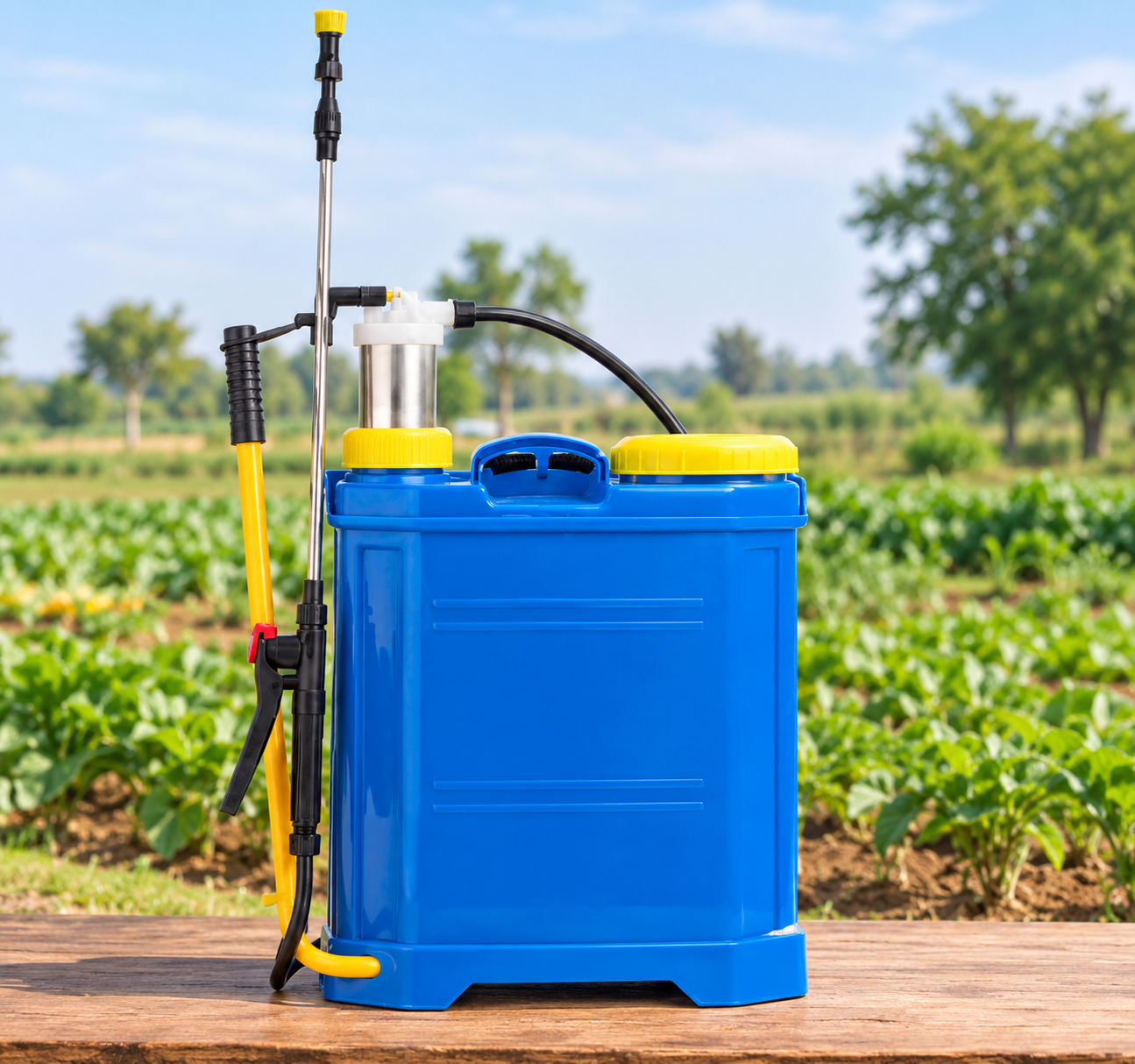
A typical sprayer may have a tank, pump, hose, lance and nozzle. Power-operated models may also include an engine or battery-powered pump.
The right machine should provide the required pressure and spray pattern while being comfortable enough to use for the required working period.
1. Consider Your Farm Size
The first thing to consider is the size of your farm.
If you have a small vegetable field, nursery or garden, a manual or battery-operated knapsack sprayer may be enough. These machines are relatively easy to carry and suitable for smaller spraying jobs.
For larger farms, orchards or regular commercial spraying, a power-operated agricultural spray machine may be more suitable. It can reduce the amount of manual pumping and help cover a larger area more efficiently.
Don’t buy a machine simply because it has a larger tank or more power. Choose a capacity that matches your actual work.
Choose the Right Type of Sprayer
Different spray machines are designed for different applications.
Manual Knapsack Sprayer
A manual knapsack sprayer is a simple option for small farms and gardens. The operator manually pumps the sprayer to build pressure.
It can be affordable and easy to maintain, but continuous pumping may become tiring during long working sessions.
Battery-Operated Sprayer
A battery-operated sprayer uses a rechargeable battery to operate the pump. It reduces the need for continuous manual pumping and can be convenient for small and medium-sized farms.
Before purchasing, check battery capacity, charging time, expected operating time and battery replacement availability.
Petrol Power Sprayer
A petrol power sprayer is designed for more demanding agricultural work. It can provide higher pressure and may be useful for larger fields, orchards and dense vegetation.
It requires fuel and regular engine maintenance, so running and servicing costs should also be considered.
High-Pressure Sprayer
High-pressure machines can be useful when spray needs to reach taller plants or dense crop canopies. They are commonly considered for orchard and specialised agricultural applications.
However, higher pressure is not automatically better. The pressure should be suitable for the crop, nozzle and application.
3. Check Tank Capacity
Tank capacity is another important factor.
A smaller tank is easier to carry but may require frequent refilling. A larger tank can reduce the number of refills but becomes heavier when filled.
For a backpack sprayer, remember that the operator has to carry the tank during spraying. Therefore, weight and comfort are just as important as capacity.
Look for a tank that is strong, easy to clean and resistant to leakage.
4. Pay Attention to Pump and Pressure
The pump is one of the most important parts of an agricultural spray machine. It moves the liquid from the tank through the hose and nozzle.
Before buying, check the machine’s operating pressure and pump specifications. The required pressure depends on the crop and application.
For example, spraying a low vegetable crop may require different conditions compared with spraying tall plants or an orchard.
Avoid choosing a machine only because it has the highest pressure. The goal is proper and uniform application, not maximum pressure.
5. Don’t Ignore the Nozzle
The nozzle may be a small part of the machine, but it has a major effect on spraying.
The nozzle determines the spray pattern and liquid discharge. Different crops and applications may require different spray patterns.
Before purchasing, check:
- Nozzle type
- Spray pattern
- Discharge rate
- Availability of replacement nozzles
- Ease of cleaning
- Compatibility with the sprayer
A good agricultural spray machine should allow you to use a suitable nozzle for your application.
6. Consider the Hose and Lance
The hose and lance should also be strong enough for regular farm use.
Check the hose length, flexibility and connections. A longer hose can be useful in orchards or larger areas, but it should be suitable for the machine’s pump.
The lance should be comfortable to hold and the trigger should operate smoothly. Small details like these become important when spraying for several hours.
7. Think About Battery or Fuel Costs
The purchase price is not the only cost of a spray machine.
For a battery sprayer, consider charging requirements and the cost of replacing the battery after its service life.
For a petrol sprayer, consider fuel consumption, engine oil and regular servicing.
If you spray frequently, these running costs can make a noticeable difference over time.
8. Check Weight and Operator Comfort
Farm spraying can take several hours, so operator comfort should not be ignored.
A heavy backpack sprayer can become uncomfortable when fully filled. Check the shoulder straps, back support, handle and overall balance.
For power-operated machines, also consider vibration, noise and ease of handling.
The best agricultural spray machine is not necessarily the most powerful one. It is the one that can do the required work without making the operator unnecessarily tired.
9. Maintenance and Spare Parts
Before buying, ask about spare parts and servicing.
Important replacement parts may include:
- Pump components
- Nozzles
- Hoses
- Filters
- Seals
- Battery
- Spark plug
- Fuel filter
- Engine components
Choose a machine for which genuine spare parts and service support are reasonably available. Regular cleaning and maintenance can also help extend the working life of the sprayer.
10. Safety Should Always Come First
Spraying agricultural chemicals requires proper care. Always read and follow the product label and recommended application instructions.
Wear suitable protective equipment such as gloves, protective clothing and eye protection when required. Avoid spraying in strong winds and keep other people and animals away from the spraying area as appropriate.
Before starting the machine, check the hose, nozzle, tank and connections for leaks or damage.
Never increase the chemical concentration or spray pressure simply to get faster results.