Grass, weeds and unwanted vegetation are common problems on farms. Keeping the area around crops, boundaries, orchards and pathways clean can take a lot of time when done with hand tools. For many farmers, a brush cutter can make this work faster and less tiring.
But choosing a brush cutter is not always easy. There are different engine types, power options, cutting blades, handles and shaft designs available in the market. The right machine depends on the type of work you do and the conditions on your farm.
If you are planning to buy a brush cutter for farm work, here are the main things you should consider.
What Is a Brush Cutter?
A brush cutter is a portable machine used for cutting grass, weeds, bushes and other unwanted vegetation. Unlike a simple grass trimmer, a brush cutter is generally designed for tougher vegetation and longer working periods.
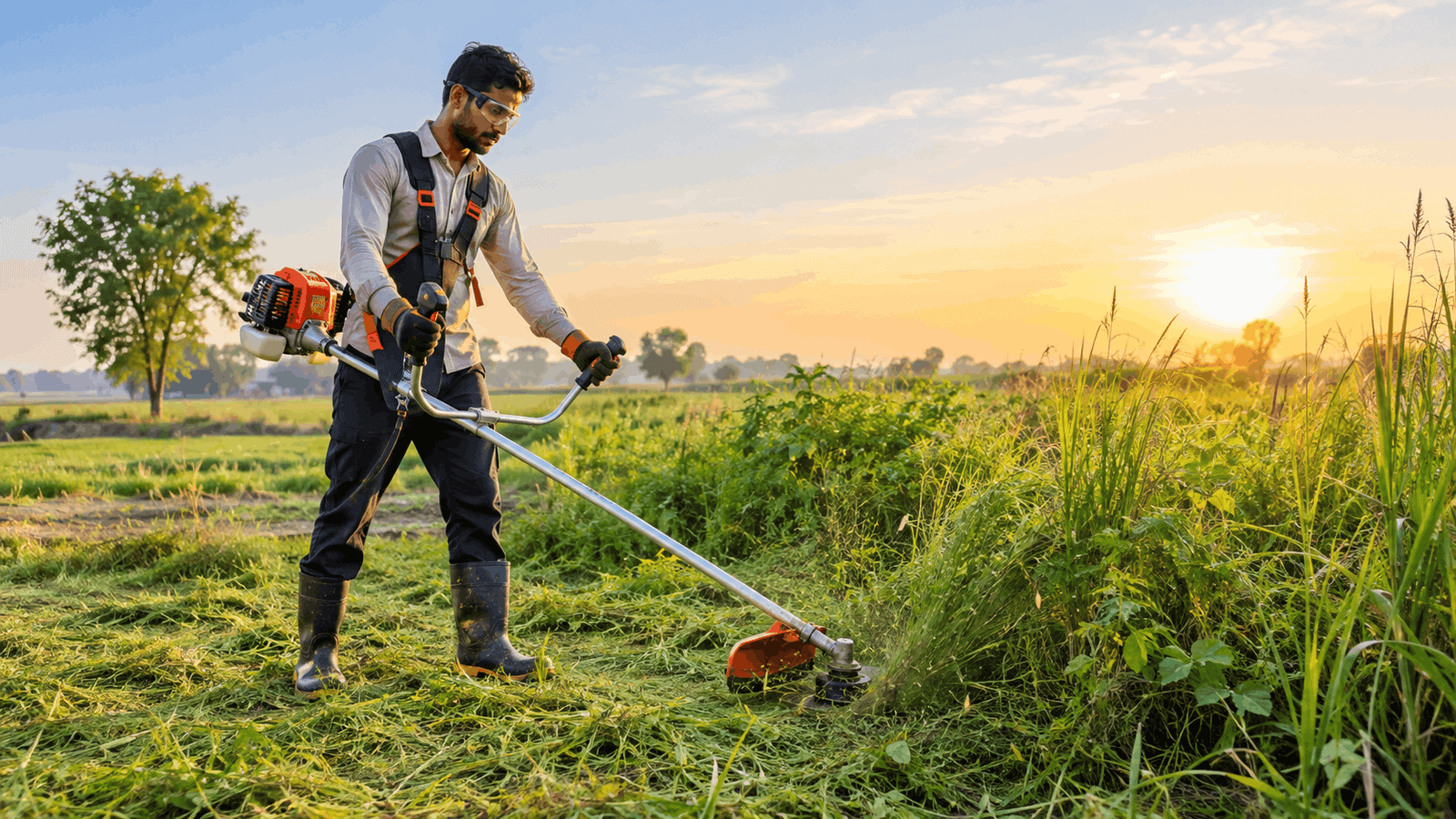
A typical petrol brush cutter has an engine, shaft, cutting head, handle, fuel tank and harness. Depending on the model, it can use a nylon line, metal blade or other suitable cutting attachment.
Farmers commonly use brush cutters around field boundaries, orchards, irrigation areas, pathways and places where grass or weeds are difficult to control manually.
Decide What You Need to Cut
Before looking at engine power or price, first consider the type of vegetation you normally deal with.
If you mainly need to cut soft grass around a farm or garden, a lighter machine may be enough.
For thick grass, dry weeds and tougher vegetation, you may need a more powerful brush cutter with a suitable metal blade.
If the area contains small bushes or heavier growth, check the manufacturer’s recommendations before selecting the cutting attachment.
In simple terms, choose the brush cutter according to the job, not just according to its engine size.
2. Choose the Right Engine Type
Petrol brush cutters are widely used for agricultural work because they can be used in areas where electrical power is not readily available.
You will commonly come across two-stroke and four-stroke engines.
Two-Stroke Brush Cutter
Two-stroke machines are generally known for being lightweight and having a good power-to-weight ratio. They are often preferred for jobs where the machine needs to be carried and moved frequently.
However, they require the correct fuel and oil mixture according to the manufacturer’s instructions.
Four-Stroke Brush Cutter
Four-stroke engines use separate engine oil and petrol. They can be suitable for users who prefer this type of engine design, particularly for longer or regular use.
When comparing engines, don’t look only at the engine type. Consider weight, power, fuel consumption, maintenance requirements and the amount of work you expect to do.
3. Check the Engine Power
Engine power is an important factor when choosing a brush cutter for farm work.
A low-powered machine may work well for soft grass but struggle with dense or thick vegetation. A more powerful machine can handle tougher jobs, but it may also be heavier and require more fuel.
For regular farm use, choose a machine that provides enough power for your typical workload without buying more power than you actually need.
If possible, ask for the manufacturer’s recommended application for the model you are considering.
4. Choose the Correct Cutting Attachment
The cutting attachment has a direct effect on what the machine can handle.
Nylon Cutting Line
Nylon line is commonly used for grass and lighter weeds. It can be useful when working around areas where a metal blade could cause unwanted damage.
Metal Blade
Metal blades are generally better suited to tougher grass, weeds and heavier vegetation, provided the machine is designed for the particular blade.
Different blade designs are available for different applications, so always use attachments approved by the manufacturer.
Never use an attachment simply because it looks stronger. The wrong attachment can create safety and performance problems.
5. Consider the Shaft and Handle Design
The shaft connects the engine to the cutting head. A strong and properly designed shaft is important for regular agricultural use.
The handle design also matters because you may be operating the brush cutter for extended periods.
Some machines use a loop handle, while others use bicycle-style handles. The best option depends on the type of work, terrain and personal comfort.
Try to check whether the controls are easy to reach and whether the machine feels balanced while being carried.
6. Don’t Ignore the Harness
A harness may seem like a small accessory, but it can make a significant difference during farm work.
A good harness helps distribute the machine’s weight and can reduce strain on the arms and shoulders.
Before buying, check whether the harness is adjustable and whether it feels comfortable with the machine attached.
For long working sessions, operator comfort can be just as important as engine power.
7. Think About Fuel Consumption
If you plan to use the brush cutter regularly, fuel consumption becomes an important part of the running cost.
A powerful engine may complete difficult work more easily, but it may consume more fuel. A smaller engine may use less fuel but could struggle with thick vegetation.
Try to balance performance and operating cost based on your actual requirements.
Also check the fuel tank capacity. A larger tank may reduce the number of refills, but it can increase the machine’s overall weight.
8. Weight Matters More Than You Think
A brush cutter is a handheld or harness-supported machine, so weight matters.
A very heavy machine may become uncomfortable after several hours, particularly when working on uneven ground.
On the other hand, an extremely lightweight machine may not provide enough power for difficult vegetation.
Look for a balance between power, weight and comfort.
A machine that you can control comfortably is often more useful than one with specifications that look impressive on paper.
9. Check Maintenance and Spare Parts
Before purchasing a brush cutter, ask about maintenance and spare parts.
Important items include:
- Air filter
- Spark plug
- Fuel filter
- Cutting line
- Blades
- Gear head
- Starter components
- Harness
- Fuel system parts
Make sure replacement parts are reasonably easy to obtain. Regular cleaning and servicing can also help maintain machine performance.
10. Safety Should Come First
A brush cutter can be extremely useful, but it is a powerful cutting machine and should be operated carefully.
Wear appropriate protective equipment such as:
- Safety glasses or face protection
- Gloves
- Sturdy footwear
- Long trousers
- Hearing protection when recommended
Before starting work, inspect the cutting attachment and make sure it is correctly fitted. Keep other people at a safe distance and avoid operating the machine when you are tired or distracted.
Always follow the manufacturer’s operating instructions and use only approved cutting attachments.
What Is the Best Brush Cutter for Farm Work?
There is no single brush cutter that is best for every farmer.
For soft grass and light weeds, a lightweight machine may be sufficient. For thick grass and tougher vegetation, you may need a more powerful petrol brush cutter with a suitable blade.
The best choice depends on:
- Type of vegetation
- Area to be cleared
- Frequency of use
- Engine power
- Machine weight
- Cutting attachment
- Handle and harness design
- Fuel consumption
- Spare-parts availability
- After-sales service
Final Thoughts
Choosing the right brush cutter for farm work becomes much easier when you first understand your actual requirements. Don’t select a machine only because it has a bigger engine or a lower price.
Think about what you need to cut, how often you will use the machine, how long you will operate it and whether replacement parts and service are available.
A properly selected brush cutter can save time, reduce manual effort and make it easier to manage grass and unwanted vegetation around the farm.
Before buying, compare the specifications, check the recommended applications and, if possible, ask for a demonstration. Choosing the right machine today can make farm maintenance much easier throughout the season.
Frequently Asked Questions
Which brush cutter is best for farm work?
The right brush cutter depends on the type of grass, weeds and vegetation you need to cut. A machine with suitable power and the correct cutting attachment is generally the better choice.
Is a petrol brush cutter suitable for farming?
Yes. Petrol brush cutters are commonly used for farm work because they can operate without a nearby electrical power source.
Is a metal blade better than nylon line?
They are designed for different jobs. Nylon line is generally suitable for grass and lighter weeds, while an approved metal blade can be useful for tougher vege What should I check before buying a brush cutter?
Check engine power, weight, fuel consumption, cutting attachment, handle, harness, spare parts, warranty and after-sales service.
Is a powerful brush cutter always better?
Not necessarily. A more powerful machine may handle tougher vegetation, but it can also be heavier and consume more fuel. Choose power according to your actual farm requirements.